


What Is Misogynoir? How Intersectional Discrimination Is Pushing Black Women Out of the Workforce

By Latrice Burks-Palmerio, Esq., Associate Attorney at JLG Lawyers

This article was adapted from a piece published in the Daily Journal. Read the original here.

She did everything right. She earned the degree, put in the extra hours, mentored the newer staff, and stayed quiet when she probably should have spoken. Then one day her role was eliminated. The official reason was restructuring. But she had watched less-qualified colleagues keep their jobs. She had heard the comments. She had felt the slow, steady erosion of being taken less seriously than the work she produced actually warranted.

She is not alone. Between February and April of 2025, more than 300,000 Black women left the American workforce. The unemployment rate for Black women climbed to 6.7 percent. News outlets reported the number but struggled to explain it. The explanations they offered, DEI rollbacks, federal layoffs, and small business headwinds, describe conditions. They do not name the cause.

The cause has a name. It is misogynoir.

What Is Misogynoir?

Misogynoir is a term coined by Black feminist scholar Moya Bailey in 2008. It describes the particular form of discrimination that Black women face when anti-Black racism and misogyny operate together, not as separate forces stacked on top of each other, but as a single, combined experience.

Understanding why that distinction matters requires stepping back for a moment. General racism affects Black people. General sexism affects women. But Black women face something that neither of those categories fully captures. They are not simply discriminated against for being Black or for being women. They are discriminated against specifically because they are Black women. The intersection is the target.

This is the core idea behind intersectionality, a framework developed by legal scholar Kimberle Crenshaw to describe how overlapping identities, race, gender, class, age, and others, create overlapping and compounding experiences of discrimination. Misogynoir applies that framework specifically to Black women, and it has roots that go back centuries.

Is misogynoir a legal term?

Not in the statute books. But the discrimination it describes is illegal. Under Title VII of the Civil Rights Act and California’s Fair Employment and Housing Act (FEHA), both race and gender are protected classes. When an employer treats a Black woman worse than her colleagues because of the combination of those two characteristics, that is actionable discrimination, regardless of what word you use to describe it.

How Misogynoir Shows Up at Work

I am a Black woman and an employment attorney. I do not just study this. I represent Black women who are living through it. The patterns I see are consistent enough that naming them matters.

Misogynoir in the workplace rarely announces itself. It accumulates. It is the job offer that came in lower than every comparable offer made to a white colleague. It is the performance review that describes the same behavior as “assertive” in a white male peer and “aggressive” in a Black woman. It is the meeting where her idea is passed over, then credited to someone else twenty minutes later.

Sometimes it is louder. Explicit comments about hair, speech, and manner. Assumptions about competence. The particular exhaustion of being asked to represent the entire experience of Black womanhood in diversity meetings while still being expected to carry a full workload. That invisible labor, the emotional and organizational work of simply existing in a space that was not built with you in mind, rarely shows up on a performance review. It rarely shows up in a paycheck, either.

And then there is the exit. It can look like a layoff. It can look like a resignation. But when you follow the thread backward, you often find conditions that became intolerable in ways that were entirely predictable and entirely manufactured.

That is not leaving. That is being pushed out.

The Legal Framework: What California Law Actually Covers

California has some of the strongest employment protections in the country. The Fair Employment and Housing Act prohibits discrimination based on race, sex, gender, and a range of other protected characteristics. Critically, FEHA allows employees to bring discrimination claims based on multiple protected characteristics at once.

This matters for Black women because it means you do not have to choose. You do not have to decide whether what happened to you was race discrimination or sex discrimination. If the answer is both, and for misogynoir it always is, California law has room for that.

Can I sue my employer for misogynoir under California law?

You can bring claims for race discrimination, sex discrimination, or both under FEHA. California courts have recognized intersectional claims. In Martin v. Board of Trustees of California State University, 97 Cal.App.5th 149 (2023), a plaintiff successfully alleged discrimination based on multiple protected characteristics in a single action. In Kuigoua v. Department of Veteran Affairs, 101 Cal.App.5th 499 (2024), the court similarly allowed combined race, gender, and national origin claims. The legal framework exists. The question is whether the facts of your case support it.

Hostile Work Environment

A hostile work environment claim does not require a single dramatic incident. It requires a pattern. Repeated microaggressions, tone policing, isolation, and gaslighting can collectively create workplace conditions that are severe or pervasive enough to be legally actionable. The standard is whether a reasonable person in the same position would find the environment hostile. Courts have applied this standard to intersectional discrimination.

Constructive Discharge

Constructive discharge happens when an employer makes working conditions so intolerable that a reasonable person would feel they had no choice but to resign. If you were pushed out rather than laid off, if the conditions became unbearable in ways you can document, that resignation may still be a legal claim. The fact that you technically submitted the paperwork does not end the analysis.

Retaliation

If you reported discrimination and then watched your performance reviews change, your projects disappear, or your role get restructured out of existence, that sequence matters. Retaliation for protected activity is illegal under both state and federal law. The timeline is evidence.

Wage and Equal Pay Claims

Black women are disproportionately offered lower starting salaries than comparable colleagues. They are disproportionately passed over for bonuses and promotions. If you have been doing the work of a higher-paid position without the title or compensation, or if you can show that comparable employees in similar roles were paid more, those are wage claims worth examining.

If This Is Your Experience: What Comes Next

The most important thing I can tell you is this. What happened to you may be illegal, and you may not know it yet. The conditions that drove you out may look, on paper, like ordinary business decisions. That is how misogynoir often operates. It is designed to be deniable. An employment attorney looks at the whole picture, not just the final act.

Document what you remember. Emails, performance reviews, text messages, dates, and details of specific conversations. The more specific your documentation, the stronger any potential case becomes.

Do not sign anything an employer presents to you without having it reviewed. Severance agreements almost always include waivers of legal claims. Once you sign, those claims are typically gone.

Talk to an attorney before you decide you do not have a case. That decision should not be made alone, and it should not be made in the first week after losing a job.

JLG Lawyers represents employees in California. We work on contingency, which means you do not pay unless there is a recovery. The first conversation is free.

If you have experienced workplace discrimination, wrongful termination, or were forced out of a job under conditions that felt wrong, we want to hear what happened.

Frequently Asked Questions

These questions are among the most common we hear from Black women who are trying to understand their legal rights after a difficult workplace experience.

What is the difference between racism, sexism, and misogynoir? Racism and sexism describe discrimination based on a single characteristic. Misogynoir describes the specific experience of Black women, who face discrimination at the intersection of race and gender simultaneously. The combined effect is distinct from either alone.

Does misogynoir have to be intentional to be illegal? No. Under California and federal employment law, discrimination does not require proof of intent. Disparate treatment, meaning being treated worse than similarly situated employees, and disparate impact, meaning neutral policies that produce discriminatory outcomes, are both legally actionable.

How long do I have to file a discrimination claim in California? Generally, you have three years from the date of the discriminatory act to file a complaint with the California Civil Rights Department (CRD) under FEHA. Filing deadlines are strict. If you believe you have a claim, speak with an attorney as soon as possible.

I resigned. Can I still have a legal claim? Potentially yes. If your working conditions became so intolerable that a reasonable person would have felt they had no choice but to leave, California law recognizes that as constructive discharge. The resignation itself does not end your legal options.

I signed a severance agreement. Is it too late? It depends on the agreement and when you signed it. Certain waivers have specific requirements under California law to be enforceable. An employment attorney can review the document and give you an honest assessment.

ABOUT THE AUTHOR

Latrice Burks-Palmerio, Esq. is an Associate Attorney at JLG Lawyers. She represents employees in California in cases involving wrongful termination, workplace discrimination, harassment, and retaliation. Before joining JLG, she worked at an AM 100 law firm focused on business litigation. A significant portion of her practice involves representing women of color who have experienced intersectional workplace discrimination. She is a vocal advocate for equality in all its forms.

This post is for informational purposes only and does not constitute legal advice. Reading this article does not create an attorney-client relationship with JLG Lawyers. Past results referenced in JLG’s materials do not guarantee future outcomes. If you believe you have an employment claim, contact a qualified California employment attorney to discuss the facts of your specific situation.

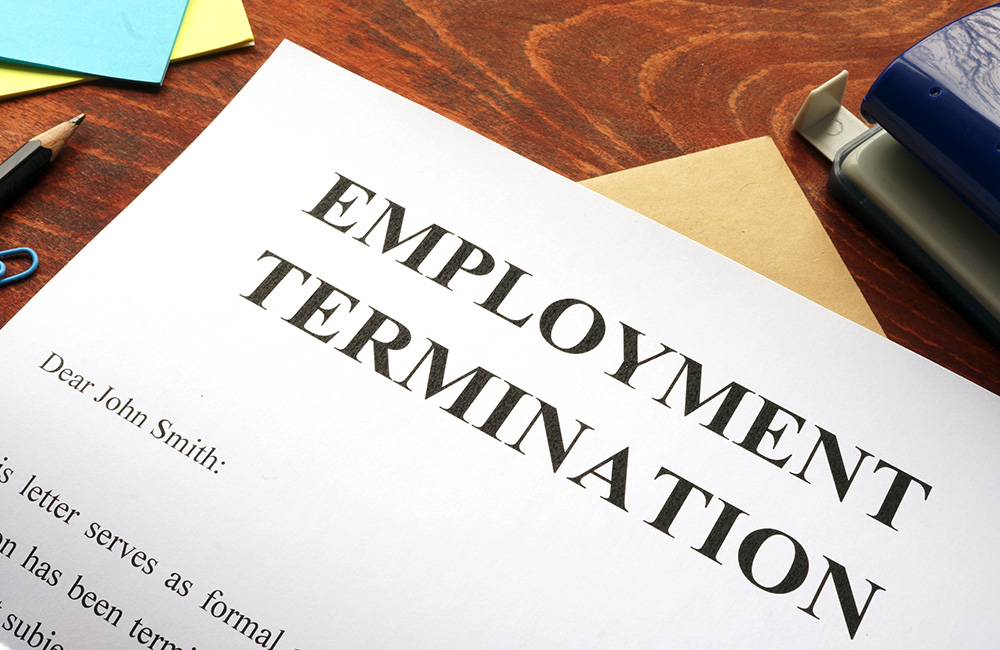
 

illegally terminated employee

How To Know If You Were Illegally Terminated

As an employee, being terminated from your job can be devastating. If your employer wrongfully terminated you, it may feel like an overwhelming situation. Fortunately, if you were fired for any illegal reason under California law, you may be able to bring a claim against your former employer. Understanding what is considered wrongful termination and your potential remedies is half the battle.

What is Considered Wrongful Termination in California?

There are three primary ways in which employers unlawfully terminate an employee. A wrongful termination claim typically will fall under one of the following broad categories: (1) Breach of Contract; (2) Retaliation; or (3) Discrimination.

BREACH OF CONTRACT

The clearest form of wrongful termination in California usually is the result of a contract between the employee and employer. While this typically involves a written contract it can also be as a result of an oral contract or by what is known as an implied in fact contract (e.g., your employer as a written policy that states they will only terminate employees for “good cause”).

  1. Breach of Contract – If you have a contract, it may contain terms and conditions of employment. One of those conditions may be that your employer can only terminate you for specific reasons or for good cause. If you are terminated for any reasons that are not consistent with your contract, this may be grounds for a wrongful termination claim.
  2. Breach of the Covenant of Good Faith and Fair Dealing California employers are obligated to not interfere with an employee’s ability to perform their duties. Employer’s that terminate an employee after engaging in certain behavior may be subject to a wrongful termination claim. Employer behavior that could lead to this type of breach include:
    1. Deliberate inaction;
    2. Interference or obstruction;
    3. Poor or no communication with the employee; and
    4. Lies or other forms of deceit

RETALIATION

In some instances, employers unlawfully terminate an employee in retaliation for a lawful action taken by an employee. These can include the following lawful actions:

  1. Taking Family or Medical Leave – Employees are entitled to take any available sick leave to take care of a medical issue or even for preventative care for themselves or a family member. In addition, under the Family and Medical Leave Act (FMLA) and the California Family Rights Act (CFRA) employees are entitled to take up to 12 weeks of leave to deal with their own medical condition or that of a family member. There is a presumption that if you are terminated within 30 days of requesting to use sick leave or 90 days within use of FMLA leave, that you were wrongfully terminated. The burden will be on the employer to prove that they did not fire you for either of those reasons.
  2. Whistleblowing – In California, you cannot be fired for reporting any employer violations of local, state, or federal laws. This practice is commonly known as whistleblowing.
  3. Complaint about Sexual Harassment – Employer’s are responsible for maintaining an environment free of sexual harassment. It is illegal for a California employer to terminate your employment because you reported a sexual harassment claim or participated in another individual’s sexual harassment claim as a witness.
  4. Complaint about violation of California’s Wage and Hours Law – California employers cannot terminate an employee for reporting things such as unpaid wages, overtime pay, or violations of required meal and rest breaks.

DISCRIMINATION

The other often seen form of wrongful termination relates to discrimination. Discrimination can occur in almost countless ways. Here are some examples:

  1. Protected Class Discrimination – There are several “protected classes” that California employers cannot terminate based on their class status. The list is long but several of those classes include (1) race, (2) color, (3) national origin, (4) sex, (5) age (if over 40), (6) disability, (7) sexual orientation and (8) gender identity. There are other protected classes as well. In addition, the specific city where you work may have their own additional classes of protected people.
  2. Pregnancy DiscriminationIn California it is illegal to terminate an employee for any of the following discriminatory reasons: (1) pregnancy; (2) planning to become pregnant; (3) pregnancy-related medical issues or (4) a request for workplace accommodations related to your pregnancy.

OTHER FORMS OF WRONGFUL TERMINATION

There are many other forms of wrongful termination and its impossible to list them all. Be aware that any termination in violation of California’s public policy is grounds for a wrongful termination claim. This can include anything from the disclosure of harmful working conditions to taking time off to serve jury duty.

Remedies for Wrongful Termination

California employees are protected by both federal and state law. If your employer has wrongfully terminated your employment, you may be entitled to damages and your former employer may also be subject to additional penalties and fines.  Depending on the type of case, wrongfully terminated employees may recover the following damages:

  1. Wages – This can include past wages (i.e., backpay), future wages, benefits and interest on these wages.
  2. Job Reinstatement – While not often sought, certain cases may allow for one to have their job reinstated.
  3. Additional Compensation – You can also receive compensation in certain cases for emotional distress and the pain and suffering you have endured as a result of the wrongful termination.
  4. Punitive Damages – In certain cases, the Court may award punitive damages if they found willful wrongdoing by the employer.
  5. Attorney’s Fees – Award of attorney’s fees is provided in a limited number of cases as well.

Remember that is important that you build a strong case. In addition to contacting a qualified California employment attorney, you are going to want to make sure you gather and preserve all relevant evidence. This may include written documents from your employer, such as job performance appraisals or the termination letter. The strength of your wrongful termination case is going to be based on the recorded communications you are able to present to prove your case. Other important information in proving your case include eyewitness accounts from co-workers as well as company employment data.

Conclusion

Understanding the details of a wrongful termination claim can be complicated. Or it may be that you are not sure if you even have a claim in the first place. As with most employment law issues, it is highly recommended that you seek the opinion of an experienced California labor and employment law attorney. They will be able to assist in evaluating your claim and determining your best course of action.

Have I been wrongful terminated?

The term “wrongful termination” is often used without a clear understanding of what it really means. When is a termination wrongful in the eyes of the law? The answer is simple. A termination is wrongful when an employee is fired for an unlawful or impermissible reason.


Under the California Fair Employment and Housing Act, one of the nation’s strongest protections against wrongful termination, it is illegal for employers to discriminate in employment decisions on the basis of several factors. Such factors include the employee’s:

wrongful termination, fired, termnation, at-will, employment


-Race

-Gender

-Age

-Pregnancy or maternity leave

-Mental or Physical disability

-Religion or religious practices

-Sexual orientation or gender identity

-National Origin

-Political affiliation

-Constructive termination – hostile work environment

-Retaliation for workplace health and safety complaints

-Retaliation for complaining about unpaid wages or overtime

-Retaliation for reporting Labor Code violations


If the decision to terminate the employee was motivated by any of these factors, even if only partially, the termination is illegal under the law. In such instances, the wronged employee may have a claim for wrongful termination.


In California many employees are under an “at-will” employment arrangement. In general, almost all employees without a labor contract are employees at-will. However, there is an important exception to at-will employment. If the employer violates a statute or public policy by firing an employee, a wrongful termination has occurred.


fired, unemployed, terminated, wrongful termnation

Employees that have experienced wrongful termination have the right to file a lawsuit against their former employers and seek monetary damages. Under the law, wronged employees may recover economic damages, such as loss of past and future wages and benefits. In addition, emotional damages may be recovered.


If the employer’s conduct is particularly malicious or reprehensible, punitive damages may be awarded as well. California law provides some of the strongest protection in the nation to employees who have been wrongfully terminated.  


While most cases are settled before trial, verdicts in wrongful termination cases can be very large, which gives employers incentive to resolve these cases before trial.

In Summary

It may seem like your stuck, alone, hurt, and angry all at the same time. You are not alone, there are many recourses available to you, including legal action which wont cost you anything upfront or out of pocket. California provides protection for employees under strict laws of wrongful termination. It may seem challenging to navigate this on your own, and we are here to help you. Leave a comment or reach out to us directly. We are here to serve you.


Wrongful Termination in California


In general, employment in California is “at-will,” which means that employers can fire an employee for any reason as long as it isn’t illegal. However, in California, an employer can be found guilty of wrongful termination if they fire an employee for violating state or federal law.

What Qualifies as Wrongful Termination in California?

Wrongful termination in California could be a result of a variety of reasons, including:

  • Discrimination: A business can’t terminate a worker as a result of their Physical or mental disability, Use of protected time off, Pregnancy status, Race or national origin, Religion or religious practices, Gender, Age, Sexual orientation, Gender identity, Political affiliation
  • Retaliation: Employees who report discrimination, harassment, or other illegal practices cannot be fired by their employers. A worker cannot be fired for participating in a legal activity, such as voting or serving on a jury, either.
  • Whistleblowing: Employees who report unethical or illegal behavior within the company cannot be fired by their employers.
  • Harassment: Employees in California are required to become familiar with the laws governing sexual harassment at work. The California Fair Employment and Housing Act, or FEHA, is the primary sexual assault law in California that forbids sexual harassment. Improper end in California can likewise result from work environment provocation, including lewd behavior. It is against the law to fire an employee for complaining of harassment because employers are required to provide a safe and respectful work environment.

Contract Breach: If an employer violates a written or implied employment contract, such as terminating an employee before the end date that was agreed upon.

What are Wrongful Termination Examples?

Some examples of unlawful termination in California:

  • Discrimination: An employee is fired when their race, gender, age, religion, national origin, sexual orientation, or any other protected characteristic is taken into consideration. An employer might, for instance, fire a female worker due to her gender or a Muslim, Hindu, or Jewish worker due to his religion.
  • Retaliation: An employee can be fired by their employer for participating in a protected activity, such as reporting safety violations, discrimination, or harassment, or for joining a union. For instance, a business might terminate a representative who reports lewd behavior by a boss or records a specialist’s remuneration guarantee.
  • Whistleblowing: Employees who report or refuse to participate in unethical or illegal behavior are fired by their employers. An employee may be fired if, for instance, they report financial fraud or refuse to take part in a plan to break environmental regulations.
  • Contract Breach: A business ends a representative infringing upon a work contract or a suggested agreement, which could incorporate an infringement of the agreements of the company. In violation of an employment contract that requires a cause for termination, an employer may, for instance, fire an employee without cause.
  • Public Policy Violation: A business ends a worker for participating in a movement that is safeguarded by open strategies, like serving on a jury, revealing criminal behavior to policing, or getting some much-needed rest for a family or clinical reasons. An employee may be fired if, for instance, they take time off to care for a sick family member or report illegal employer behavior.
  • Worker’s Compensation Claim Retaliation: When an employee files a workers’ compensation claim or reports an injury at work, their employment is terminated. An employee might be fired if they file a workers’ compensation claim and report an illness or injury at work.
  • Defying the WARN Act: Under the WARN Act, which requires employers to provide advance notice of mass layoffs or plant closures, an employer terminates employees without providing proper notice. Under the WARN Act, for instance, an employer may fire a group of workers without giving them 60 days’ notice.
  • Harassment: Under California law, the employer is strictly accountable when a manager or supervisor sexually harasses a subordinate. This means that if a manager or supervisor sexually harasses a subordinate, the company is responsible. However, an employer can only be held accountable for workplace harassment if they knew about the harassment (or learned about it) and did nothing to stop it. Employers may also be held accountable for harassment committed by customers or clients if they knew about the harassment (or should have known about it) and did not act appropriately to prevent an employee from continued harassment. Wrongful termination based on sexual harassment may occur if an employer sexually harasses an employee and then fires them after the employee rejects their advances.

What is Considered Cause for Wrongful Termination in California?

Wrongful termination means when an employer terminates an employee for an illegal reason. Employers in California are prohibited from terminating employees in violation of the law. Discrimination, retaliation for participating in a protected activity, whistleblowing, breach of contract, violation of public policy, retaliation for filing a workers’ compensation claim, and violation of the WARN Act are all potential causes of wrongful termination.

What is Considered Wrongful Termination in California?

Many people use the term “wrongful termination” without really knowing what it means. When is an end unfair, legally speaking? The response is easy. When an employee is fired for a reason that is not legal or allowed, the termination is wrong.

It is against the law for employers to discriminate in employment decisions based on a variety of factors under the California Fair Employment and Housing Act, which is one of the strongest protections against wrongful termination in the nation. These factors include:

  • Race
  • Gender
  • Age
  • Harassment
  • Pregnancy
  • Mental or Physical disability
  • Religion
  • Sexual orientation
  • National Origin
  • Political affiliation
  • Retaliation for complaints and reports of violations

It is against the law to fire an employee if any, if not all, of these factors, played a role in the decision to do so. The wronged employee may have a wrongful termination claim in these situations.

What to Do If You Have Experienced Wrongful Termination in California?

We recommend that you immediately take the following two steps if you lose your job and believe you may have a wrongful termination claim against your former employer:

Naturally, gathering evidence involves obtaining and preserving all written documents regarding your termination and prior job performance from your employer (such as copies of all past performance reviews and your termination letter).

If you have not already saved some of these documents, you may need to ask your employer for them. An attorney can assist you in making these requests more forcefully if your employer does not respond.

A California employment lawyer can help you identify the evidence that will be crucial as the case progresses and play a crucial role in the collection of evidence for a lawsuit.

Is wrongful termination hard to prove?

It is the employee’s responsibility to demonstrate her case by a preponderance of the evidence in a wrongful termination case. The majority of the time, there is no hard evidence. To prevail in her wrongful termination claim, an employee does not require “smoking gun” evidence. By pointing to an employer’s shifting reasons for the termination, inconsistencies in the employer’s story, or proximity in time between an employee’s protected conduct and the employee’s discharge, an employee may be able to win a wrongful termination case.

Wrongful Termination Settlement in California:

If you were fired without cause in California, you may be eligible for compensation. The severity of the violation, the length of time you were employed, and any damages you sustained due to the termination will all influence the settlement amount. The damages that an employee who was fired can get for filing a California wrongful discharge lawsuit can vary from case to case. However, in most cases, they will include at least one of the following:

  • Benefits and wages lost
  • Wages and back pay
  • Monetary compensation for emotional distress and pain and suffering caused by job loss;
  • Fees for an attorney
  • Punitive damages, which are intended to punish the employer’s willful misconduct

Conclusion

Wrongful termination cases in California are a severe problem that can have significant repercussions for both employers and employees. It is critical to consult an experienced employment lawyer if you have been wrongfully terminated so that they can explain your legal options and rights. You can safeguard yourself and hold your employer accountable for their actions by taking the necessary precautions.

Contact us for assistance if you’ve been fired or let go for illegal reasons

If you think you were fired because of your disability or medical condition, you might want to talk to a lawyer or a legal aid organization.

If you have any inquiries regarding your circumstance, make an appointment for a case review with one of the best employment law firms in California.

Contact our wrongful termination California lawyers to learn more about your legal options. Consultations and legal counsel are available from our law firm.