
How to Document Workplace Discrimination and Retaliation: A Step-by-Step Guide
Why Documentation Matters
If you are experiencing discrimination or retaliation at work, thorough documentation is crucial. Documentation provides evidence of what happened, when it happened, and who witnessed it. This evidence is essential for proving your case if you decide to file a complaint with a government agency or pursue a lawsuit.
What to Document
Document anything related to the discriminatory or retaliatory conduct:
- Dates, times, and locations of incidents
- Names of people involved, including both perpetrators and witnesses
- What was said or done, including direct quotes if possible
- How the conduct affected you
- Any consequences, such as a denied promotion or reduced hours
- Names of witnesses and what they observed
- Your response to the conduct
- Any reports you made to HR or management
How to Document
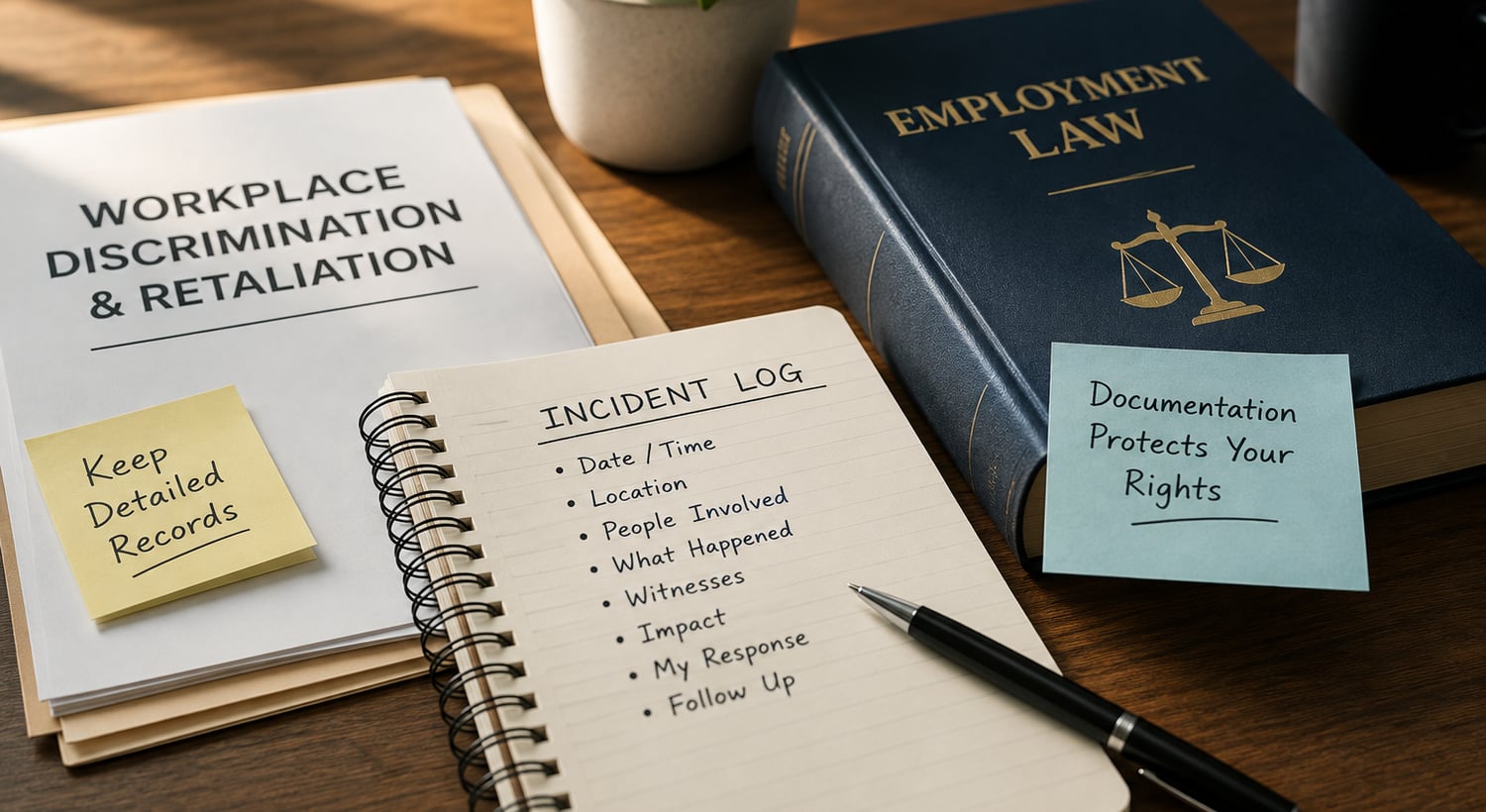
Use a journal or notebook to record incidents. For each incident, include:
- Date and Time: Write the exact date and time of the incident.
- Location: Note where the incident occurred.
- People Involved: List the names and titles of those involved.
- What Happened: Describe the incident in detail, including what was said or done.
- Your Response: Note how you responded and felt.
- Witnesses: Identify anyone who witnessed the incident.
- Impact: Describe how the incident affected you emotionally, professionally, or otherwise.
Keep Copies of Documents
In addition to your personal journal, keep copies of:
- Emails related to the discriminatory conduct
- Text messages or instant messages
- Performance reviews
- Disciplinary notices
- Memos or notes about meetings
- Pay stubs or records showing wage violations
- Medical records if the discrimination relates to a medical condition
- Documentation of complaints you made to HR or management
Use Secure Storage
Store your documentation in a secure location outside of work, such as:
- A personal email account
- Cloud storage, such as Google Drive or Dropbox
- A hard drive at home
- A secure password-protected folder on your personal computer
Take Photos or Screenshots
If there is physical evidence of discrimination, such as offensive materials posted at work, take photos or screenshots. Make sure to include the date and context.
Report the Conduct
Consider reporting the discriminatory conduct to your HR department or management. When you do:
- Put the report in writing, such as by email
- Include specific details, including dates, times, and what was said
- Request written confirmation that you made the report
- Keep a copy for your records
- Document any response, or lack of response, from HR or management
Contact an Attorney
Once you have documented the discrimination or retaliation, consult with an employment law attorney. An attorney can review your documentation, assess the strength of your case, and advise you on next steps.
Contact JLG Lawyers
If you are experiencing discrimination or retaliation at work, JLG Lawyers can help. Bring your documentation to your free consultation, and our attorneys will review your case and advise you of your legal rights. Book a call with us today at https://jlglawyers.com/book-a-call