
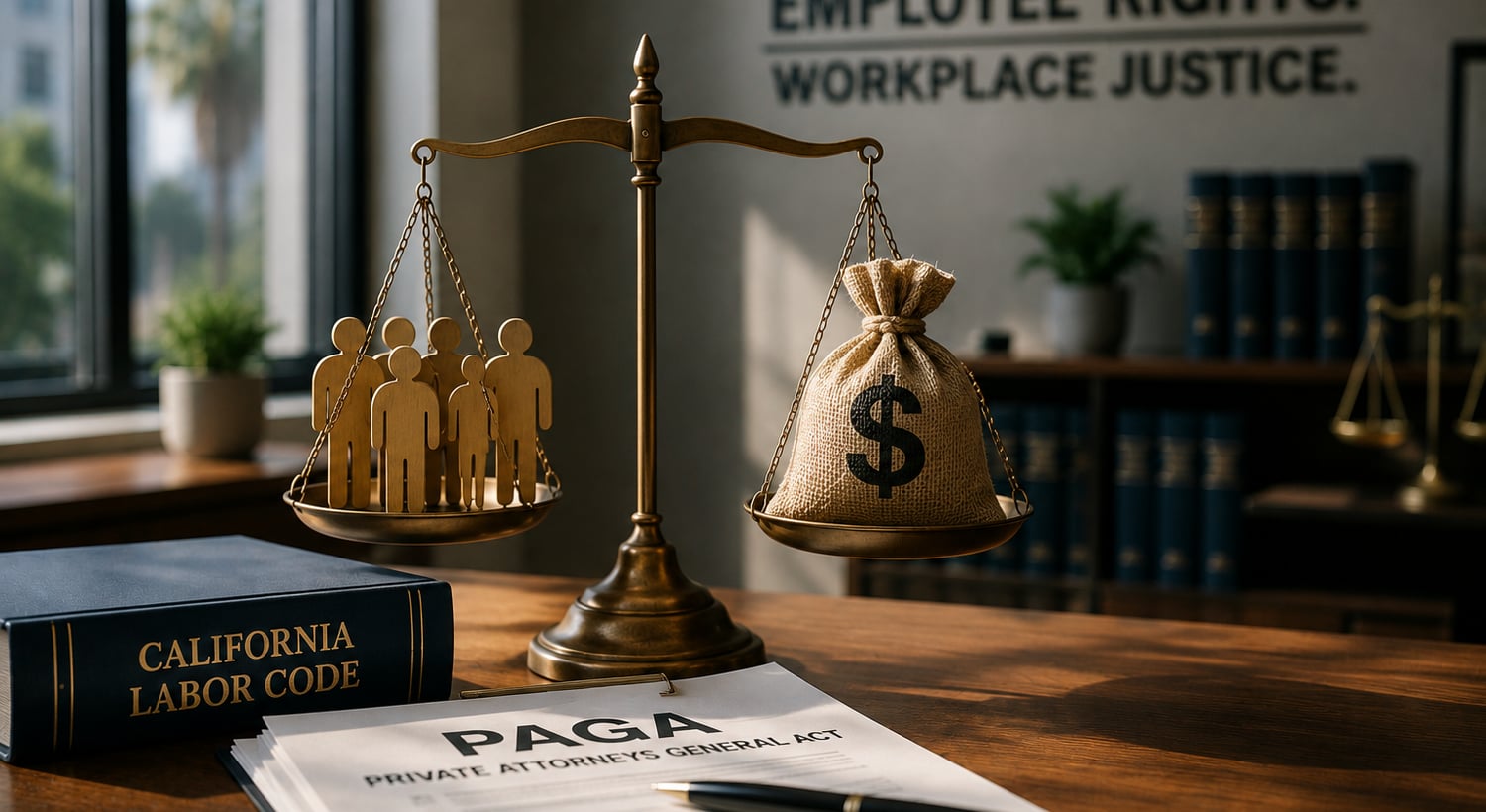
PAGA Claims in California: Wage Violations & Employee Rights
PAGA Claims: How to Sue Your Employer for Wage Violations on Behalf of Employees
PAGA stands for the Private Attorneys General Act. It is a California law that allows eligible employees to pursue civil penalties for Labor Code violations on behalf of the State of California and other affected employees. PAGA can apply to wage and hour violations such as unpaid overtime, missed meal and rest breaks, inaccurate wage statements, unreimbursed business expenses, and certain other Labor Code violations.
PAGA is different from an individual wage claim. A PAGA lawsuit primarily seeks civil penalties for Labor Code violations, while an employee may pursue unpaid wages and other damages through separate claims. If your employer has failed to pay wages or overtime, see JLG Lawyers' wage and overtime claims page.
What Is PAGA?
The Private Attorneys General Act allows an aggrieved employee to act as a representative of the State of California to enforce certain provisions of the Labor Code. Instead of relying exclusively on state agencies to pursue civil penalties, eligible employees can bring a PAGA lawsuit against a private employer for qualifying violations.
PAGA is administered by California's Labor and Workforce Development Agency. Employees considering a claim should review the state's official PAGA guidance, because PAGA has specific notice, filing, and procedural requirements.
Why PAGA Matters
PAGA gives employees another way to enforce California labor protections when workplace violations affect more than one worker. A single employee may be able to pursue civil penalties connected to violations suffered by other current or former employees who experienced the same Labor Code violations.
This can be particularly important when unlawful practices are widespread, such as a company policy that consistently denies meal breaks, fails to pay overtime, issues inaccurate wage statements, or improperly shifts business expenses to employees.
Who Can File a PAGA Claim?
Not every worker automatically has standing to bring every alleged PAGA violation. For PAGA notices filed on or after June 19, 2024, a current or former employee generally must have personally experienced each Labor Code violation they seek to pursue on behalf of other employees.
PAGA generally applies to private employers rather than government employers. Because standing depends on the specific violations and when the PAGA notice was filed, an employment attorney can help determine which claims an employee may be able to pursue.
What Violations Can Be Pursued Under PAGA?
Many California Labor Code violations may potentially support a PAGA claim. Common examples include:
- Failure to pay minimum wage
- Failure to pay overtime
- Failure to provide legally required meal periods
- Failure to provide legally required rest periods
- Failure to reimburse necessary business expenses
- Inaccurate or incomplete itemized wage statements
- Failure to timely pay wages when required
- Certain employee misclassification violations
- Certain recordkeeping and other Labor Code violations
If your employer classified you as an independent contractor rather than an employee, you can also review JLG Lawyers' employee misclassification information.
How the PAGA Process Works
An employee generally cannot simply file a PAGA lawsuit immediately. Before filing in court, the employee must provide notice to the Labor and Workforce Development Agency and the employer. The notice must identify the Labor Code provisions allegedly violated and include sufficient facts and legal theories supporting the allegations.
The PAGA notice is submitted through California's PAGA Filing Portal. The employer must also receive the required notice.
For many wage and hour claims, the Labor Commissioner's Office has an opportunity to decide whether it will investigate. If the agency does not provide notice that it intends to investigate within the applicable period, the employee may generally proceed with a PAGA lawsuit. If an investigation occurs, additional waiting periods and procedures apply.
Can an Employer Fix the Violations Before a PAGA Lawsuit?
In some circumstances, yes. California's 2024 PAGA reforms expanded the ability of employers to cure certain Labor Code violations after receiving a PAGA notice.
Potentially curable violations can include minimum wage, overtime, meal and rest break, expense reimbursement, and wage statement issues. A legally sufficient cure can require correcting the practice and making affected employees whole.
Whether an employer has successfully cured a violation can significantly affect whether a PAGA lawsuit may proceed and what penalties may be available.
What Penalties Are Available Under PAGA?
PAGA primarily allows recovery of civil penalties. The amount depends on the Labor Code provisions involved, the nature of the violations, the employer's conduct, and whether the employer took steps to comply with or cure the alleged violations.
California's 2024 reforms changed how many PAGA penalties are calculated and created reductions in certain circumstances when employers take reasonable compliance or corrective measures. Because of these changes, older descriptions stating that every PAGA violation automatically results in $100 or $200 per employee can be misleading.
For PAGA notices filed on or after June 19, 2024, 65% of recovered civil penalties generally goes to the State of California and 35% goes to the aggrieved employees.
Can You Recover Unpaid Wages Through PAGA?
A PAGA action itself is primarily a claim for civil penalties. Unpaid wages, overtime, statutory damages, and other compensation are generally pursued through separate wage claims or causes of action, which may be brought alongside a PAGA claim when appropriate.
For example, an employee whose employer failed to pay overtime may pursue the unpaid overtime personally while also pursuing PAGA penalties connected to Labor Code violations affecting other employees. Read more about failure to pay wages and overtime.
PAGA vs. an Individual Wage Claim
An individual wage claim focuses primarily on compensation owed to the employee bringing the claim. The California Labor Commissioner can hear many claims involving unpaid wages, overtime, meal or rest period premiums, and other compensation.
A PAGA claim is different because the employee acts as a representative of the State of California to pursue civil penalties for Labor Code violations affecting the employee and other aggrieved employees.
Employees can learn more about individual wage claims through the California Labor Commissioner's Office.
What Evidence Can Help Support a PAGA Claim?
The evidence needed depends on the alleged Labor Code violations. Documents that may be relevant include:
- Pay stubs and wage statements
- Timecards and timekeeping records
- Work schedules
- Meal and rest break records
- Emails or messages concerning hours worked
- Expense reports and receipts
- Employee handbooks and written workplace policies
- Communications showing that the same practice affected other employees
What Happens If a PAGA Case Settles?
PAGA settlements are subject to court review. The court evaluates whether the proposed resolution is fair, reasonable, adequate, and consistent with PAGA's enforcement goals.
A proposed PAGA settlement must also be submitted to the Labor and Workforce Development Agency. This is another important difference between PAGA litigation and an ordinary private settlement involving only one employee.
Frequently Asked Questions About PAGA Claims
Do I Have to File a Wage Claim With the Labor Commissioner Before Filing PAGA?
Not necessarily. PAGA has its own administrative notice process. Before filing a PAGA lawsuit, an employee generally submits a PAGA notice to the Labor and Workforce Development Agency and provides notice to the employer. This is different from filing an individual wage claim with the Labor Commissioner.
Can One Employee Bring a PAGA Claim for Other Employees?
Yes, if the legal requirements are satisfied. PAGA allows an eligible employee to seek civil penalties involving the employee and other current or former employees who experienced the same Labor Code violations. For newer PAGA notices, the employee generally must have personally experienced each violation being pursued.
Is a PAGA Claim the Same as a Class Action?
No. PAGA is a representative enforcement action brought on behalf of the State of California. A class action is a different procedural mechanism for pursuing claims on behalf of a defined group. A lawsuit may involve PAGA claims, class claims, individual claims, or a combination depending on the circumstances.
Do Employees Receive All of the PAGA Penalties?
No. For PAGA notices filed on or after June 19, 2024, 65% of recovered civil penalties generally goes to the State of California and 35% goes to the aggrieved employees.
Can an Employer Cure a PAGA Violation?
Certain violations can potentially be cured. California expanded the cure process as part of the 2024 PAGA reforms. Whether a particular violation has been properly cured depends on the type of violation and whether the employer completed the required corrective measures.
Should I Speak With an Attorney Before Filing a PAGA Notice?
PAGA notices must identify the Labor Code provisions at issue and provide sufficient facts and legal theories supporting the alleged violations. Because the contents of the notice can affect the scope of a later lawsuit, employees considering a PAGA claim may benefit from discussing the situation with an employment attorney before filing.
Contact JLG Lawyers
If you believe your employer has violated California wage and hour laws, JLG Lawyers can evaluate whether you may have individual wage claims, a PAGA claim, or both.
Book a free consultation to discuss your employment situation and the options that may be available under California law.
This article provides general information and is not legal advice.