
Small Business Bankruptcy Act Effective March 20, 2020 Aimed at Streamlining Chapter 11 Reorganization.

On March 20, 2020, Congress approved, and earlier this month the President signed, the Small Business Reorganization Act of 2019 (SBRA 2019) which streamlines existing rules governing the efforts of small businesses to restructure successfully under Chapter 11 of the Bankruptcy Code. The law effectively makes it more difficult for creditors to contest small business Chapter 11 cases, but it also provides creditors in all bankruptcy cases several major benefits through changes to the preference laws. The timing couldn’t be better with the COVID-19 pandemic affecting virtually every small business and creating financial hardships requiring assistance like Chapter 11 protection.

Subchapter V of Chapter 11.

A small business debtor is a business entity or individual which is engaged in business whose aggregate non-contingent debts (excluding debts to affiliates or insiders) do not exceed $2,725,625 and which elects to be treated as a small business. The Act adds a new subchapter V to Chapter 11 of the Bankruptcy Code to make it easier and less expensive for small businesses to successfully reorganize. 

The Act’s key provisions include:

  1. Only the small business may file a Chapter 11 plan, but the Act requires that the debtor file its plan within 90 days of the date it files its bankruptcy petition, except in certain circumstances;
  2. A standing trustee similar to those appointed in Chapter 13 cases will be appointed to oversee each small business case;
  3. A creditors committee will not be formed;
  4. The Chapter 11 plan can modify the rights of a creditor secured by a security interest in the debtor’s principal residence if the loan secured by the residence was not used to acquire the residence but was used in connection with the debtor’s business;
  5. The Court can confirm a debtor’s plan without the support of any class of claims as long as the plan does not discriminate unfairly and is deemed to be fair and equitable with respect to each class of claims;
  6. To be fair and equitable, the Chapter 11 plan must provide that all of the debtor’s projected disposable income to be received during the length of the plan will be applied to make payments under the plan for a period of 3 to 5 years.

As in all Chapter 11 cases, creditors will need to be vigilant to ensure that Courts properly evaluate Chapter 11 plans, especially those that lack creditor support, and that their rights are properly protected.

Changes to Preference Laws.

The Act makes several significant changes to existing preference laws which will be welcomed by creditors. Currently, trustees and debtors in possession have broad authority to file lawsuits to recover preferential transfers which were made 90 days prior to the date the bankruptcy case was filed, or in the case of insiders, one year. In addition, under the prior law if the amount of the transfer was less than $13,650, then the trustee or debtor in possession would have to file the lawsuit to recover the transfer in the federal district where the defendant resides, not in the district where the bankruptcy case is pending. The Act raises the threshold for non-insider defendants from $13,650 to $25,000 so that claims of less than $25,000 must be filed in the district where the defendant resides. In addition, the Act adds as a requirement that, before filing the lawsuit to recover a preference, the trustee or debtor in possession must exercise reasonable due diligence and must “. . . take into account a party’s known or reasonably knowable affirmative defenses . . .”. Due to costs and logistics, preference suits are rarely filed outside of the district where the bankruptcy case is pending, so raising the threshold to $25,000 effectively immunizes most transfers less than $25,000 from recovery. In addition, the Act’s due diligence requirement will certainly result in a reduction of the number of preference lawsuits.

Contact Us:

We understand debt settlement and bankruptcy is a challenging topic to face both financially and emotionally. The processes can become very complicated in a system that is difficult to navigate and frequently changes. Consulting with a good lawyer as soon as possible is incredibly important to the success of your debt settlement or bankruptcy strategy. At JLG Lawyers we offer solutions to help advise you and answer questions all the way to a full attorney handled case. Contact us now for a free case review and strategy session.

JLG Lawyers and Michael Jaurigue, Esq. are located in Glendale, California and specialize in debt settlement and bankruptcy matters. Michael Jaurigue is a UCLA and Berkeley Law graduate and has been practicing law for 20 years in Los Angeles and worked at Sheppard, Mullin, Richter, and Hampton representing several Fortune 100 clients prior to forming his own firm 10 years ago. JLG Lawyers is located at 300 W Glenoaks Blvd. Suite 300, Glendale, California 91202. 818-630-7280.

The PPP program is poised to get an additional $300 billion, but many small businesses will never see it.

Chasing Money

For many small businesses struggling to survive the fallout of the coronavirus pandemic, the only hope of staying afloat until a potential reopening was a Paycheck Protection Program (PPP) loan.

But the PPP exhausted nearly $350 billion set aside under the CARES Act for low-interest loans to small businesses. On Tuesday, the Senate passed a measure that would inject an additional $300 billion into PPP.   As part of the $2.2 trillion coronavirus stimulus package, known as the CARES Act, $349 billion was allocated to small businesses, initially as loans. PPP, administered through the Small Business Administration, was authorized to provide small businesses with loans to pay eight weeks of salary, benefits and other eligible costs. Those loans will be forgiven if a business restores its full-time employment and salary levels by June 30.

Many small businesses jumped at that opportunity, and within 13 days the funds were gone.   On Tuesday, the Senate approved a $484 billion relief package that includes an additional $310 billion for PPP. President Donald Trump is likely to approve the package, which also includes more funding for hospitals and coronavirus testing. The Senate’s package is in line with what Treasury Secretary Steven Mnuchin said he was discussing with Democratic leaders over the weekend.

Here are some other possible options:

1. Venture-capital funding

Unlike with a loan, businesses that receive venture-capital financing aren’t typically responsible for paying it back. The downside is that they often have to forfeit a portion of their control. But for “smaller and mid-sized business that had existing relations with venture capitalists and never dipped toe in water, I could see venture capitalists being interested,” Prosen said. “They could even get a good discount without giving away a ton of control.”

It may be more difficult to get a loan from traditional sources now that banks and other financial intermediaries have begun to tighten their lending standards, said Eric Pendleton, the principal at Pendleton Financing, a commercial lending business based in Boston. Some lenders, he added, have stopped lending completely to higher-risk borrowers.

2. Employee-retention tax credit

“PPP is definitely the largest program right now, but it’s not the only option,” said Jared Hecht, the CEO and co-founder of Fundera, a marketplace for small-business loans. He cited the employee-retention tax credit recently introduced as part of the CARES Act to encourage employers to keep workers on payroll.

4. Crowd-sourced funding
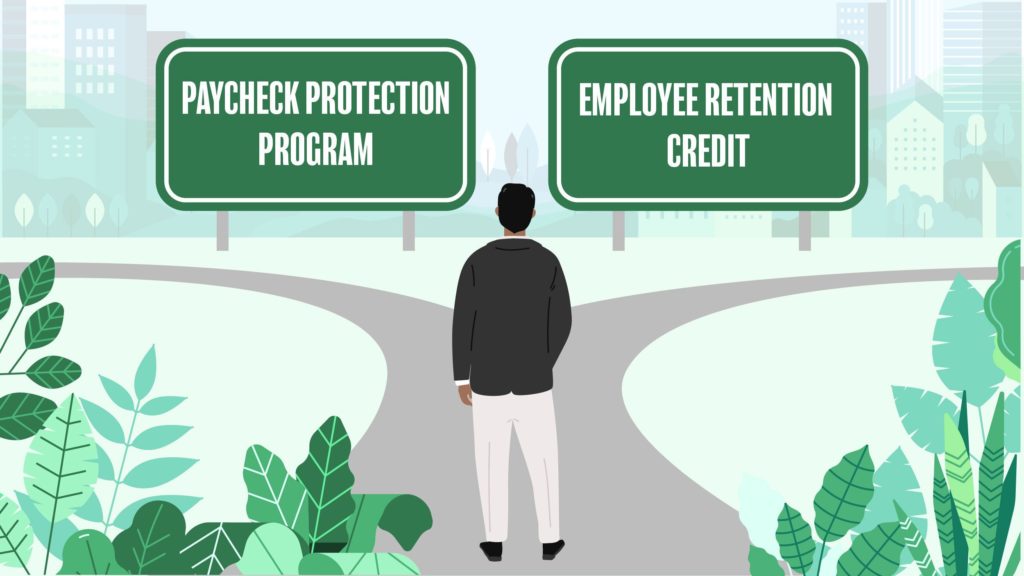
PPP vs. Employee Retention Credit

IFundWomen, a startup funding platform co-founded by Kate Anderson, helps women obtain the capital they need to launch or operate their business through crowdfunding and grants. The number of members tripled in March and there are now over 108,000 members, including funders and entrepreneurs.

IFundWomen launched a COVID-19 relief campaign so that funders can easily identify businesses that are struggling to get by during this time. Crowdfunding, while not as reliable as the PPP program, can help companies keep their lights on “without giving away equity,” Anderson said.

The platform operates in a similar manner to sites like GoFundMe. However, IFundWomen is specifically a crowd-funding platform dedicated to funding female-owned businesses.

Nearly 30% of all small businesses are owned by women; however, they receive only 16% of conventional small-business loans and 17% of SBA loans, according to a 2014 report by the Senate Small Business and Entrepreneurship Committee.

5. Look to family and friends

This is an option of last resort. A loan from relatives or friends will typically come with less fine print and arrive in wallets faster, Prosen said.

Given that 22 million Americans are out of work, however, don’t bank on this option, said Holly Wade, the director of research and policy analysis for the National Federation of Independent Business, a nonprofit small-business association.

Family and friends may be hesitant to dip into their own savings at this time, especially given the heightened uncertainty regarding the U.S. economic outlook, she said. What’s more, mixing business with friendship and family can often lead to broken relationships, experts say.

Contact Us:

We understand debt settlement and bankruptcy is a challenging topic to face both financially and emotionally. The processes can become very complicated in a system that is difficult to navigate and frequently changes. Consulting with a good lawyer as soon as possible is incredibly important to the success of your debt settlement or bankruptcy strategy. At JLG Lawyers we offer solutions to help advise you and answer questions all the way to a full attorney handled case. Contact us now for a free case review and strategy session.

JLG Lawyers and Michael Jaurigue, Esq. are located in Glendale, California and specialize in debt settlement and bankruptcy matters. Michael Jaurigue is a UCLA and Berkeley Law graduate and has been practicing law for 20 years in Los Angeles and worked at Sheppard, Mullin, Richter, and Hampton representing several Fortune 100 clients prior to forming his own firm 10 years ago. JLG Lawyers is located at 300 W Glenoaks Blvd. Suite 300, Glendale, California 91202. 818-630-7280.

Filing Bankruptcy in COVID – 19

The last several weeks have brought limited relief to businesses grappling with an immediate economic downturn that is the result of COVID-19 and social distancing. However, some businesses will require more help than short-term loans backed by the government can provide. They will need to restructure mortgage loans, reduce debt service, or even eliminate unsecured debt.

During this crisis, there will be an unprecedented number of bankruptcies filed and many companies and individuals will find bankruptcy as their last lifeline. There are several different types of bankruptcy depending if you own a home, a small business, or struggling to just stay on top of your credit cards and rent.

cares act, chapter 11, chapter 7, chapter 13,

Businesses and individuals will be able to use powerful tools under the Bankruptcy code to clear up debts, and clean your balance sheet while also getting breathing room and preventing creditors coming in and taking over. Its more important then ever know and understand your rights as a consumer or business. There is extended protection under the CARES in conjunction with traditional bankruptcies filings.

There are 3 primary types of Bankruptcy filings which included Chapter 7, Chapter 11, and Chapter 13. Each one depends on if your a business, if you want to keep your doors open or forced to liquidate your assets. If your an individual looking for a lifeline a Chapter 7 can provide immediate relief. The CARES act chapter 11 subchapter V allows businesses with up to 7,500,000 dollars to now file for a 11 protecting their assets, which is available for only 1 year, at which time the amount will return back to 2 million and change.

COVID – 19 has made these times uncertain and its important to talk to the experts about what your options may be. Contacting us is hassle free and may be the best option you have to protect yourself.

In Summery

We are all heading into a period of significant economic disruption, likely for an extended period of time until we have reliable testing, strong therapeutics, and a vaccine for the novel coronavirus causing COVID-19. Contacting us will provide a free consultation and make you fully aware of your options. We can help position you so you don’t have to worry.

PPP is out of money, leaving many firms grasping for lifelines

PPP Is Running Out of Money

A new Lending program for Small business maxed out Thursday morning and Stopped accepting new application for loans. All banks participating in the SBA loan programs have effectively stopped loaning money. Any replenishment of these Funds seems unlikely to happen at the moment as Congress is bitterly divided how to move forward as the nation plunged into unemployment levels not seen since the great depression.

The Small Business Administration said on its website that the agency “is unable to accept new application … based on available appropriations funding”

This leaves many business who submitted an application and waiting on funds to evaporate right in front of them overnight – literately. The economy continues to crumble and lawmakers are scattered all over the country advancing conflicting proposals and bickering.

The government has not released data showing how much of that cash has been disbursed. It unclear how many firms have secured new loans however its estimated that only a small portion of firms have gotten any money from the program, though it appears to be just a fraction of the 30 million small businesses in the United States.

The SBA approved 1,661,397 loans from 4,975 lenders before it was exhausted. Due to bottleneck issues between the agency and banks, only a fraction of those have actually been credited to customers’ bank accounts.

This week, JPMorgan Chase said it has funded $9.3 billion of the loans so far and was still processing 300,000 applications seeking $36 billion. Bank of America says it has received applications seeking more than $40 billion in loans.

The Federal Reserve eased restrictions it had put on Wells Fargo’s growth after the San Francisco-based bank said it had received applications worth more than $10 billion in loans in just a few days.

The PPP program reached its funding limit while a separate program, called Economic Injury Disaster Loans, is also running short on funds. The funding shortfall has already caused that program to slash the size of loans it gives to small businesses, SBA officials say.

In a statement Wednesday, Mnuchin and SBA Administrator Jovita Carranza warned that a lapse in appropriations threatens to further disrupt the loan programs.


Small-business owners have few options now that the fund is dry. Many businesses whose applications were approved before the funding ran dry are in limbo, too. The SBA has not specified how much of the allocated $350 billion has actually been transferred to owners’ bank accounts, and many businesses haven’t seen their loans.

The White House administration has requested another $250 billion for the program, but a political clash between Democrats and Republicans has let the funding lapse. Democrats have insisted that part of the funding be walled off for lenders that service minority-owned businesses, and have push for another $250 billion for hard-hit hospitals on the frontlines of the pandemic, states and local governments suffering from revenue loss, and a 15 percent increase in food stamps.

In Summary

Because of the bitter divide, many firms are now considering bankruptcy protection as their next best option. The government relief seems tepid at best and protecting your your business, your home, and your family has never been more important. Contacting one of our top bankruptcy attorneys for a free consultation by phone to understand your options.

Contact Us:

We understand debt settlement and bankruptcy is a challenging topic to face both financially and emotionally. The processes can become very complicated in a system that is difficult to navigate and frequently changes. Consulting with a good lawyer as soon as possible is incredibly important to the success of your debt settlement or bankruptcy strategy. At JLG Lawyers we offer solutions to help advise you and answer questions all the way to a full attorney handled case. Contact us now for a free case review and strategy session.

JLG Lawyers and Michael Jaurigue, Esq. are located in Glendale, California and specialize in debt settlement and bankruptcy matters. Michael Jaurigue is a UCLA and Berkeley Law graduate and has been practicing law for 20 years in Los Angeles and worked at Sheppard, Mullin, Richter, and Hampton representing several Fortune 100 clients prior to forming his own firm 10 years ago. JLG Lawyers is located at 300 W Glenoaks Blvd. Suite 300, Glendale, California 91202. 818-630-7280.
How the CARES act can help your Business

What is the CARES act?

The Coronavirus Aid, Relief, and Economic Security Act, is a law meant to address the economic fallout of the 2020 coronavirus pandemic in the United States.

What is the SBRA 2019 Law?

CARES ACT
Washington

By cutting red Tape, removing limitations and restrictions, SBRA law makes small business chapter 11 feasible. 

How does this law help me?

Now faster and less expensive, SBRA allows you file chapter 11 and reorganize your debt while keeping your business open.

Do I qualify for the SBRA Chapter 11?  

Businesses with debts totaling not more then $2,725,625 dollars can qualify.

How Does the CARES act affect this?

Its amends eligibility and increases the debt threshold now up to $7,500,000 for the next year.

 Where can I find more information?

We have a free Ebook, and staff available to help answer any questions that you have. 

Making sense of Payment Protection Program

CARES act, coronavirus, money, loan, sbna, sba,

Do I Qualify for The Small Business Stimulus Loans?

To qualify for SBA funding under this new program, you must be a small business as defined by the SBA. This includes:

  • Small businesses or non-profit 501(c)(3) organizations with 500 or fewer employees
  • Small businesses, 501(c)(19) veteran’s organizations  or tribal concerns that meet the SBA size standards (See SBA size standards here.) 
  • Sole proprietors or independent contractors

Businesses in the food or hospitality industry (NAICS codes beginning in (72) may be eligible on a per location basis. 

In addition the normal affiliation rules are waived for franchises or businesses receiving financial assistance from a Small Business Investment Company.

The business must be in operation by February 15, 2020.

How Much Money Can I Borrow? 

The basic answer is that the maximum loan amount is 2.5 times the average monthly payroll for the 12 months preceding the date the loan is made, up to a maximum of $10 million

Where Can I Get One of These Loans?

Individual lenders, including many banks, credit unions and some online lenders will make these loans.

What Can I Use the Funds For? 

You can use the loan proceeds for: 

  • payroll costs; 
  • costs related to the continuation of group health care benefits during periods of paid sick, medical, or family leave, and insurance premiums;
  • employee salaries, commissions, or similar compensations;
  • payments of interest on any mortgage obligation (but not to pay principal or to prepay a mortgage)
  • rent (including rent under a lease agreement); 
  • utilities; 
  • interest on any other debt obligations that were incurred before the covered period,
  • refinancing an SBA EIDL loan made between January 31, 2020 and April 3, 2020

How Fast Will I Have to Repay It?

money, covid-19, loan, grants

These loans have a maximum term of two years. You can prepay at any time without penalty. 

What Is the Interest Rate and Fees? 

The interest rate for these loans will be 1% for all lenders that make them. Normal 7(a) loan fees are waived. 

Is there a Personal or Business Credit Check?

None is required. 

How Soon Do I Have to Start Making Payments?

Payments will be deferred for six months (though interest will accrue).

How Fast Will I Have to Repay It?

These loans have a maximum term of two years. You can prepay at any time without penalty. 

How Soon Do I Have to Start Making Payments?

Payments will be deferred for six months (though interest will accrue).

How Do I Get Loan Forgiveness?

If you get one of these loans, you can request forgiveness of the principal portion of the loan for the eight week period after you get the loan that covers:

  • Payroll costs
  • Interest on a mortgage
  • Rent 
  • Utilities 

However, no more than 25% of the forgiven amount can be attributed to non-payroll costs.

Your loan forgiveness will be reduced if you decrease your full-time employee headcount. It will also be reduced if you decrease salaries and wages by more than 25% for any employee that made less than $100,000 annually in 2019. You may also receive forgiveness for additional wages paid to tipped workers.

In addition: 

  • Payroll includes the costs listed under the section “What Does Payroll Include?” below. 
  • Forgiven debt will not be taxable. 
  • The mortgage, rent and utilities covered in this section must be in place before February 15, 2020. 

Is the new SBRA chapter 11 right for your business?

SBRA, Chapter 11, bankruptcy

Congress just made it easier and less expensive for small businesses to reorganize under Chapter 11. Small businesses continue to struggle under the current social isolation measures in place in most states.

Even with the recent financial relief package passed by Congress, many small businesses will not have sufficient resources to meet their most basic obligations such as rent, utilities and other operational necessities.

In an effort to keep small business afloat during this crisis, Congress expanded small business bankruptcy relief in the Coronavirus Aid, Relief and Economic Security Act (CARES Act).

The CARES Act amends the Small Business Reorganization Act of 2019 (SBRA) by increasing the availability of Chapter 11 relief to a greater number of small businesses. Section 1113 of the CARES Act amends eligibility to qualify for filing as a small business debtor for a business which has debt up to $7.5 million.

The current debt limit to qualify as a small business filer under SBRA is $2,725,625. This increase in the debt threshold of $7.5 million will expire and return to $2,725,625 after one year.

SBRA has only been effective since February 19, 2020. Prior to the enactment of subchapter V, created by SBRA, many small businesses found traditional Chapter 11 proceedings difficult and expensive, and not a practical tool for reorganization. Often, small businesses would end up in liquidation. The goal of the SBRA is to make small business bankruptcies faster and less expensive.

Subchapter V was enacted to address some of these issues. Some of the key features of a Chapter 11, subchapter V case:

  • There is no creditors committee.
  • A case trustee is appointed. The private trustee monitors the debtor’s progress during the case in order to promote consensual plans of reorganization.
  • There is no requirement to file a disclosure statement. The plan of reorganization will include a brief history of the business, a liquidation analysis and financial projections.
  • A plan of reorganization must be filed within 90 days. All of the debtor’s disposable income must be put to plan payments to creditors, and the plan must be at least three years and cannot exceed five years.
  • Only the debtor can file a plan.
  • No United States Trustees fees.
  • Owners are able to retain their interests in the business.
  • If the debtor completes the payments required under a confirmed plan, it receives a discharge of the remaining debt.

These are material changes that will significantly impact the rights and procedures to which both debtors and creditors are accustomed in traditional Chapter 11s. And the applicability of the SBRA to potential traditional Chapter 11 filers is also significant. It has been estimated, based on recent Chapter 11 statistics, that up to half of Chapter 11 debtors will be eligible to file under the SBRA.

In Summary :

  • The SBRA Act endeavors to strike a balance between chapter 7 and chapter 11 bankruptcies for small-business debtors.
  • The act lowers costs and streamlines the plan confirmation process to better enable small businesses to survive bankruptcy and retain control of its operations.

1,895% spike in Mortgage deferments amid confusion on paying it back

Americans struggling to pay their mortgages because they’ve lost a job or income during the coronavirus pandemic can put off that bill for up to a year due to the CARES Act. But while the measures should be creating a feeling of relief, many borrowers have been left anxious because of confusing messages from the government and banks. 

deferment, mortgage, home, rent, past due, CARES act, home loan,

Experts are concerned about how this will play out for borrowers over the coming months, even after the recently enacted relief package from Congress, called the CARES Act, which allows many people to delay their mortgage payments for up to a year. 

“The problem with the CARES Act is that it doesn’t make clear how borrowers pay back the money during a forbearance period,” says Shamus Roller, executive director at National Housing Law Project, a nonprofit legal advocacy center.

“There’s a chance that something could go wrong in that process,” he says, “and it requires a lot of interacting with service centers that are overburdened with calls.”

Other concerns that are out there is that if borrowers continue to miss payment for half a year or longer then the FHFA will have to rescue Fannie, Freddie and lenders alike.

What are your options?

That depends on many factors and how long everything takes to get back to normally. Some areas of the economy will recover quickly, while other like airlines, hospitality, bars & restaurants, move theaters, and many others could take years to recover.

Enhanced unemployment insurance is available to most people out of work including self employed and independent contractors. However this is typically a small portion of what your annualized income is and could be challenging to maintain your head above water.

Bankruptcy could be a viable option to stopping foreclosures, repossession, and debt collectors.

In Summary

Be proactive and don’t just sit around waiting for the government to do something. Take an inventory of your assets, review your obligation, area of work and expertise, and then weigh your options. In some cases bankruptcy could be your best option, to get some immediate relief, which clan play a “stay” on everything all at once and allow time to start to reorganize.

Small Business Closures Rapidly Growing

America’s Small Business Lifeline Already Running Out Of Money On Day 1 Says Wells Fargo CEO.

Tuesday April 7, 2020 by JLG Admin

Charles Shcarf
CEO of Wells Fargo, Charles W. Scharf

Last month, the US Congress created a $350 billion fund to keep small businesses solvent and workers on payrolls, amid widespread commercial shutdowns to try and contain the coronavirus pandemic. Demand for the program is proving to be immense, and there are signs that it could run out of money.

Wells Fargo said Sunday evening that it has exhausted its $10 billion capacity for lending under the SBA’s Paycheck Protection Program as the bank operates under a regulatory asset cap.

In other words, amid the pandemic-induced downturn that has some talking of an impending economic depression, one of the nation’s largest lenders will largely be kept on the sidelines

“Today, the company continues to operate in compliance with an asset cap imposed by its regulator due to actions of past leadership,” Wells Fargo CEO Charlie Scharf said in a statement Sunday. “While we are actively working to create balance sheet capacity to lend, we are limited in our ongoing ability to use our strong capital and liquidity position to extend additional credit.

The legislation for the Paycheck Protection Program was written quickly and got off on to a rocky start on Friday: The CEO of small business lender Fountainhead said he still had a number of unanswered questions about it and that his company didn’t have a way to submit applications to the Small Business Administration, which is guaranteeing the loans.

Last month, the US Congress created a $350 billion fund to keep small businesses solvent and workers on payrolls, amid widespread commercial shutdowns to try and contain the coronavirus pandemic. Demand for the program is proving to be immense, and there are signs that it could run out of money.

Wells Fargo said Sunday evening that it has exhausted its $10 billion capacity for lending under the SBA’s Paycheck Protection Program as the bank operates under a regulatory asset cap.

In other words, amid the pandemic-induced downturn that has some talking of an impending economic depression, one of the nation’s largest lenders will largely be kept on the sidelines

“Today, the company continues to operate in compliance with an asset cap imposed by its regulator due to actions of past leadership,” Wells Fargo CEO Charlie Scharf said in a statement Sunday. “While we are actively working to create balance sheet capacity to lend, we are limited in our ongoing ability to use our strong capital and liquidity position to extend additional credit.

The legislation for the Paycheck Protection Program was written quickly and got off on to a rocky start on Friday: The CEO of small business lender Fountainhead said he still had a number of unanswered questions about it and that his company didn’t have a way to submit applications to the Small Business Administration, which is guaranteeing the loans.

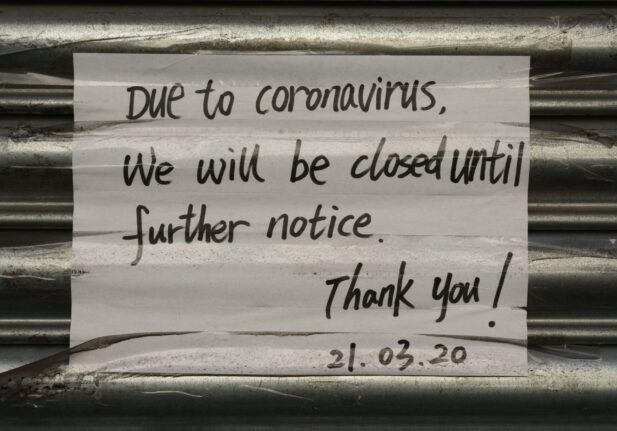
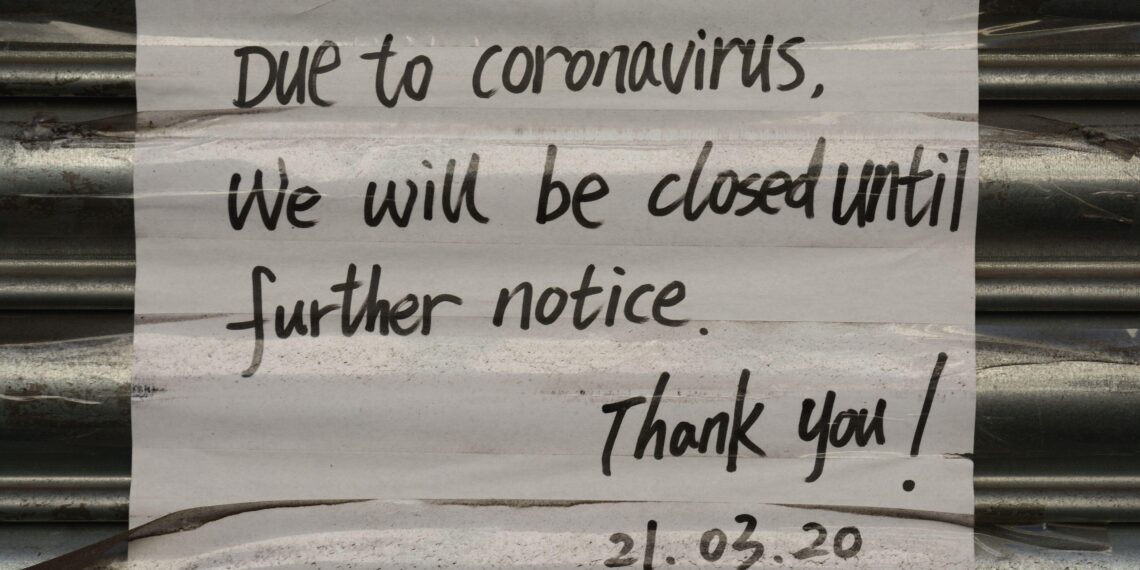
Closed Due to Coronavirus

Wells Fargo closing its loan window under the special SBA program is likely to stun millions of small business owners across the country that bank with Wells Fargo and were planning to apply this week for the SBA PPP loans that eventually become grants if the money is used to keep employees on the payroll and to pay other eligible expenses.

Small business owners’ lenders and accountants are expecting a wave of loan applications to come in this week for the SBA program that began on April 3.

Bank of America, the first big bank to get up and running, received more than $22 billion of loan requests from 85,000 small enterprises, according to CNBC. Wells Fargo said yesterday that it has already received $10 billion of requests from small businesses, which is enough to exhaust its lending capacity under program.

Getting the money out quickly was sure to be a challenge. The SBA handled about $30 billion of small business lending last year, and now it’s charged with pumping out some ten times that amount as quickly as possible.

Hundreds of lenders were still trying to get approval to access the SBA system after it went live on Friday, according to Independent Community Bankers of America. The agency’s systems were overwhelmed by the traffic, while banks remained “frustrated with a myriad of unanswered questions and lack of clear instruction,” the trade group said. The amount of money available is likely to be far too little.

As the world reels in uncertainty about life and death, America’s small business owners are realizing quickly that there are no options, short term or long term.  When Wells Fargo, one of the world’s largest banks, exhausted its disaster resources on the first day the message was clear that no help is coming anytime soon.  With no cure on the horizon, no date to possibly reopen, and limited financial lifeline’s, it is only a matter of time before small business owners simply start giving up.  An America with its small businesses out of hope and giving up is right around the corner, and the outlook is less than promising.

Piggy Bank Drowning

3 Ways Small Businesses Will Survive COVID-19

Piggy Bank Drowning

Americans all across the country are being urged to remain in their residences and practice social distancing, as more and more local and state governments are issuing stay at home orders. As a result of the social isolation required to manage the state of the COVID-19 pandemic, over 10 million Americans have filed for unemployment. It has been estimated by the Federal Reserve Bank St Louis District that job losses could total up to 47 million, an unemployment rate of 32%, exceeding that of the Great Depression. While these projections may be impacted by the $2 trillion coronavirus relief act allocating financial relief programs, it is fair to say that no individual or business will be unaffected.  

Possibly the most affected by the implications of this crisis, will be the small businesses that are vital to the health of our nation’s economy, providing a GDP contribution most recently recorded to be $5.9 trillion. Before the pandemic, small businesses employed 58.9 million people in the United States, nearly half of all the employees in the private sector. In order for small business in America to survive this health and economic crisis, there are three strategies that should be top of mind.

1. Lobby for Liquidity

Prior to the pandemic, driving a small business forward was already an uphill battle. Approximately only half of small businesses in America stayed open past 5 years according to the Small Business Administration. This is typically due to the lack of cash flow to cover the heap of expenses that coincide with any small business; rent, utilities, payroll, cost of goods, liquid cash flow to the owners, etc. With the impending obstacles ahead, including decrease in revenue due to slowed services, expenses of transitioning to a virtual business, financial distress and low morale of employees, and difficulty obtaining investments, the entrepreneurs and small businesses of America will quickly reach a breaking point.

The best way for small business owners to address this liquidity concern is to lobby for state and federal governments to provide immediate assistance with cash flow to cover expenses. Entrepreneurs and owners can support proposals such as the “Small Business Workforce Stabilization Fund,” which would forgive financial assistance provided to small businesses that were financially stable pre-pandemic, and maintain the same number of employees a year after the crisis. Additionally, this legislation proposes to increase the SBA Express loan limit from $350,000 to $1 million. Proposals such as this will keep small businesses afloat that will otherwise have to shut down and further contribute to the growing number of unemployed Americans.

2. Capital is Crucial

The largest contributor to cost of goods is almost uniformly payroll expenses. And while loans provided by the SBA solve an immediate problem, they can also add financial pressure on owners whose debt has increased and have to allocate funds to pay back fees right away. These pressure often lead to owners making the difficult decision to resort to lay-offs.

A good solution to assisting small business owners with these expenses is the proposed $300 billion relief plan titled the RESCUE (Restoring Economic Security, Confidence, and User Endurance) Business Act. With this legislation, the SBA loan limit previously mentioned would be implemented so that small businesses can cover costs and ensure working capital. And all SBA 7(a) loan fees would be waived for one year, and a 90% loan guarantee would be implemented.

3. Participate in Local Politics

American activist Gloria Steinem summed up the importance of your action when she stated, “The future depends entirely on what each of us does every day; a movement is only people moving.” The voices of small business owners can make a powerful impact on the direction of our nation’s economy, if they are heard. If you stay silent, massive corporations will speak for you and make crucial decisions about economic policy and emergency financial relief legislation that will decide the future of your business.

If you are looking for a way to have influence, engage with your political leaders via social media, emails, phone calls, or even a traditional letter, and express the urgency of your need for financial relief. According to the Harvard Business Review, “franchising stands to lose 26,500 small businesses due to COVID-19 alone and the wrong legislation will raise the number of closures to 33,000. For small businesses outside of the franchising industry, this number could be even higher.” You can protect your small business by maximizing liquidity, accessing capital, and doing your part to push the legislation that will determine our nation’s economic future.